The Great Race defeats and seals away the ancient beings
The Colour Out of SpaceThe Great Race defeats and seals away the ancient beings describes a victory that becomes a long-term containment effort rather than a final destruction. When the Great Race arrived on Earth, it overcame the Elder Things with instruments of its own making and forced them into caverns beneath the cities. Entrances were sealed, but later eruptions from below showed that the defeated beings remained a danger across geological ages. In the story’s account of deep time, conquest leaves a subterranean enemy and an inheritance of vigilance.
Background to the Conflict
The account places the conflict about six hundred million years ago, long before humanity. The Elder Things had come from immeasurably distant universes and held dominion over Earth and three other planets in the solar system. Their presence belonged to a succession of life and power on a scale that makes human history only a late episode. The narrator’s broader reconstruction describes dominant races and civilizations extending across immense stretches of time, unsettling the assumption that humanity is the planet’s first or ultimate master.
The Elder Things were alien not only in origin but in the conditions of their existence. They were only partly material by terrestrial standards, and their perception did not include sight; their mental world consisted of patterns of impressions unlike those of organisms on Earth. They could pass their senses through material barriers, yet their substance could not pass through those barriers. They could move through the air without visible wings or other means of levitation, and certain forms of electrical energy could destroy them. Their minds were so unlike those of the Great Race that the two could not exchange consciousness. These differences help explain why their defeat did not mean that they could simply be understood, assimilated, or removed from the world.
Defeat and Sealing
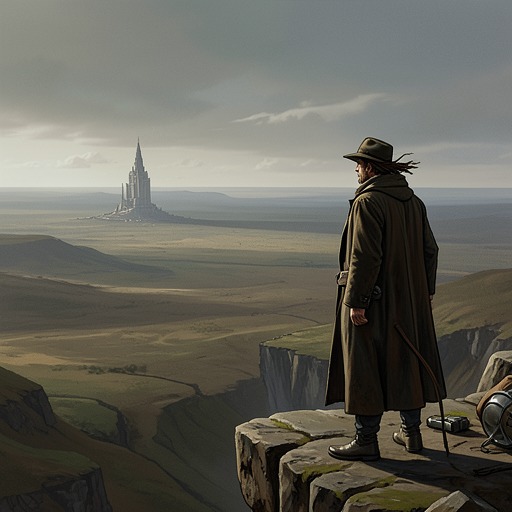
The Elder Things had built immense basalt cities of windowless towers and preyed upon the beings they encountered. The Great Race’s minds crossed space from Yith, and its members used instruments they had created to subdue the predatory inhabitants. They drove them down into the caverns of the inner Earth, which the Great Race had already connected to its own abodes, then sealed the entrances. The victors occupied most of the great cities above, while preserving some important buildings for reasons associated with superstition as well as other, less clearly specified considerations.
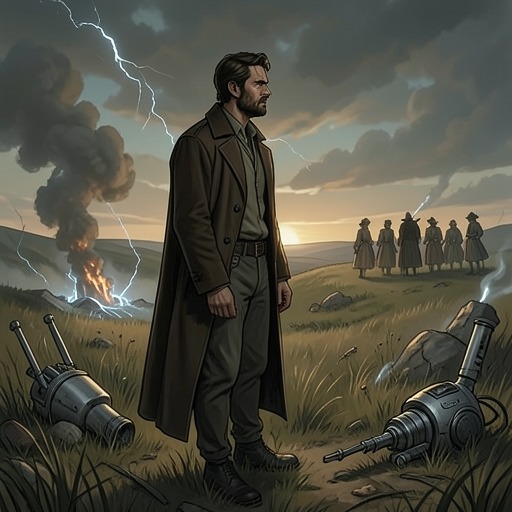
The action therefore combines military victory with a deliberate spatial separation. Rather than eradicate their opponents, the Great Race confined them in the depths and secured the paths between the inner world and the surface. Its cities and the subterranean realm remained physically joined, making the barrier a matter of guarded access rather than distance. The sealed entrances stood as both a practical defence and a lasting reminder that the enemy had not ceased to exist.
Renewed Incursions and Lasting Vigilance
The seals did not end the danger. As ages passed, the Great Race received signs that the Elder Things were growing stronger and more numerous below. Particularly disturbing incursions occurred in remote cities and in abandoned Elder Thing settlements where routes into the depths had not been adequately sealed or guarded. In response, the Great Race increased its precautions and closed many passages permanently. It retained a few sealed trapdoors for strategic use, in case the Elder Things broke through at unexpected points. Geological change had already choked some routes and altered the surviving ruins, but it could not be relied upon as a complete defence.
The recurrence of incursions explains why the Great Race treated this history as a taboo. The fear had entered its collective psychology so deeply that members avoided describing the Elder Things, and ordinary records and public discussion left the subject obscure. The surviving hints associate the beings with strange whistling sounds, colossal footprints marked by five circular toes, and possible control or military use of great winds, but these fragments never provide a reliable full account of their appearance. Silence itself registers the conflict’s continuing force: even after the apparent victory, the defeated beings shaped what the victors dared to remember and say.
The Great Race’s projections into the future disclosed a still greater peril: an eventual, successful irruption. The anticipated attack was understood as vengeance rather than a campaign to reclaim the surface. The Great Race therefore prepared to send millions of its minds forward in time to inhabit the safer bodies of the future Post-human Beetle Race. Its projections also indicated that the Elder Things would be dead by that era. The original sealing thus bought time, but did not promise permanent security for the civilization that had carried it out.
Material Traces and Narrative Significance
The account reaches the reader through the narrator’s dreams, recollections, and investigation, so its ancient history is presented as a disturbing reconstruction rather than as an independently witnessed battle. Legends and impressions suggest that Earth had hosted dominant beings before humanity; in the Australian desert, an expedition later uncovered about 1,250 worn blocks, many carved and some shaped like parts of vaults or arches. Their age and distribution suggested vast geological change, while their resemblance to the narrator’s dream imagery made them seem connected to a lost world. The discoveries intensify the historical possibility without resolving how much of the narrator’s interpretation is true.
That uncertainty culminates in the narrator’s account of finding a book in a metal case deep within the ruins. Its pages bore English words in his own handwriting, an apparent trace of his consciousness reaching into an age far older than humanity. This revelation gives the Great Race’s struggle against the Elder Things a double significance: it is an episode in the planet’s buried past and part of a history the narrator may have encountered through displaced memory. The victory remains real within the narrative’s reconstructed chronology, but its evidence arrives through fragments, ruins, and an unsettlingly personal record.